1. Material Make-up and Ceramic Handling of Alumina Cooking Equipment
1.1 From Bauxite to Dense Ceramic: The Production Trip
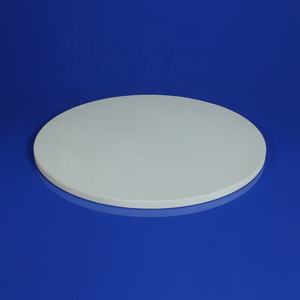
(Alumina Ceramic Baking Dish)
Alumina ceramic baking meals are produced from aluminum oxide (Al two O FIVE), a synthetic ceramic compound acquired mostly from bauxite ore with the Bayer procedure.
The raw alumina powder, commonly 90– 99.5% pure, undertakes milling to achieve a fine bit dimension distribution, which is important for uniform densification throughout developing and sintering.
To form the baking dish, the powder is blended with binders and plasticizers, then developed using techniques such as slip spreading, uniaxial pressing, or isostatic pressing to create a “environment-friendly” body with the preferred geometry.
After creating, the environment-friendly body is dried and discharged in a high-temperature kiln at temperatures between 1400 ° C and 1600 ° C in an oxidizing ambience.
This sintering process repel organic additives and generates atomic diffusion, leading to a dense, polycrystalline microstructure with very little porosity– generally less than 2%.
The final product is a completely combined ceramic with high mechanical stamina, chemical inertness, and exceptional thermal security, making it appropriate for repeated exposure to oven environments.
1.2 Microstructural Attributes and Phase Purity
The performance of alumina baking recipes is carefully tied to their microstructure, which contains randomly oriented Al two O six grains varying from 1 to 10 micrometers in dimension.
Higher-purity formulas (e.g., 99% Al Two O FOUR) show higher thermal shock resistance and chemical resilience, while lower-purity grades may consist of additional stages such as mullite or glassy grain border stages that can decrease mechanical strength at raised temperature levels.
Makers typically optimize grain dimension and circulation to stabilize durability and thermal conductivity, ensuring the dish can withstand quick temperature changes without fracturing.
Unlike glazed ceramics or porcelain, top notch alumina cooking meals are fully thick and non-porous, eliminating the danger of fluid absorption and microbial development– a considerable advantage for food safety and long-lasting hygiene.
This inherent impermeability likewise protects against taste transfer in between different foods, making alumina ideal for flexible cooking area usage.
2. Thermal and Mechanical Actions in Cooking Environments
2.1 Thermal Conductivity, Retention, and Uniform Heating
Alumina porcelains possess modest thermal conductivity– around 20– 30 W/m · K– higher than most glass or porcelain cooking equipment but lower than metals like aluminum or copper.
This building enables steady and even warmth distribution throughout the recipe, decreasing locations that can bring about uneven cooking or scorching.
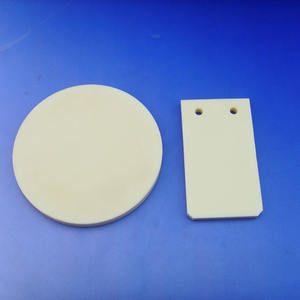
( Alumina Ceramic Baking Dish)
Once heated, alumina shows excellent thermal retention due to its high heat capacity, permitting food to remain warm for extended durations after elimination from the stove.
This characteristic is especially valuable for serving meals, covered dishes, and slow-cooked dishes where consistent temperature is vital for appearance and flavor development.
Additionally, alumina can hold up against constant use at temperatures as much as 1500 ° C in commercial settings, though typical kitchen ovens run below 300 ° C, putting very little stress and anxiety on the product.
Its capability to sustain repeated thermal biking– such as relocating from freezer to oven or oven to countertop– without deterioration makes it a durable option for contemporary culinary applications.
2.2 Mechanical Stamina and Resilience Under Daily Usage
Despite being a brittle ceramic, high-density alumina supplies premium solidity (Mohs hardness of 9, second only to diamond and cubic boron nitride), making it very resistant to damaging, abrasion, and surface wear.
This resistance guarantees that the food preparation surface stays smooth and non-reactive gradually, avoiding food deposit buildup and helping with easy cleansing.
While alumina dishes are not unsusceptible to influence crack– specifically if dropped on tough surfaces– they are significantly much more robust than traditional earthenware or ceramic because of their fine-grained, low-porosity framework.
Many business alumina baking dishes are developed with thick walls and enhanced edges to enhance structural honesty and lower damaging threats.
In addition, their chemical inertness makes certain no leaching of metal ions or glaze parts into food, also under acidic or alkaline food preparation problems, conference strict food call security criteria.
3. Functional Benefits Over Standard Kitchenware Materials
3.1 Comparison with Glass, Metal, and Enameled Steel
Contrasted to borosilicate glass (e.g., Pyrex), alumina ceramics provide premium thermal shock resistance and mechanical stamina, lowering the possibility of abrupt fracture during temperature level shifts.
Unlike steel baking trays, which can catalyze Maillard responses exceedingly or react with acidic ingredients, alumina supplies a neutral, non-catalytic surface area that protects food chemistry.
Enameled steel kitchenware, while sturdy, can reveal underlying metal if damaged, causing corrosion and contamination; alumina, being totally uniform, does not experience such delamination threats.
Furthermore, alumina’s non-porous nature gets rid of the requirement for spices or oiling, unlike cast iron, and prevents the potential for microbial emigration in microcracks.
These practical advantages placement alumina as a sanitary, durable, and performance-oriented alternative in both residential and specialist kitchen areas.
3.2 Microwave, Oven, and Fridge Freezer Compatibility
Alumina ceramic baking dishes are totally suitable with traditional ovens, stove, griddles, and freezers, enabling smooth transitions from storage to cooking to serving.
They are additionally microwave-safe, as alumina is transparent to microwave radiation and does not produce swirl currents or arcing like metallic kitchenware.
However, individuals need to guarantee that no metallic paints or trims exist on ornamental versions, as these can trigger sparking.
The product’s security across a vast temperature level variety– from ice-cold fridge freezer conditions to high-heat broiling– makes it suitable for preparing recipes that call for chilling prior to baking or completing under a grill.
This adaptability sustains modern cooking techniques such as sous-vide complied with by burning, or make-ahead meals that are frozen and reheated without container transfer.
4. Applications, Sustainability, and Future Developments
4.1 Culinary Makes Use Of and Industrial-Scale Food Preparation
Alumina ceramic cooking recipes are commonly utilized for roasting veggies, cooking covered dishes, preparing gratins, and serving directly at the table as a result of their visual appeal and warmth retention.
In industrial cooking areas, their resilience and resistance to thermal fatigue make them cost-effective with time regardless of a greater preliminary rate contrasted to disposable aluminum trays.
They are also utilized in food handling labs and pilot plants for controlled thermal experiments, where material purity and dimensional security are essential.
Their inertness makes sure that experimental outcomes are not skewed by container interactions, an essential consider recipe growth and sensory testing.
4.2 Ecological Influence and Material Development
From a sustainability point of view, alumina porcelains have a high personified power because of sintering at severe temperatures, but their long life offsets this through lowered replacement frequency and waste generation.
Unlike single-use aluminum foil or plastic containers, a single alumina recipe can last decades with proper treatment, adding to circular economic situation principles in household products.
Ongoing research focuses on boosting sturdiness via composite formulations– such as incorporating zirconia or silicon carbide micro-inclusions– and developing energy-efficient sintering techniques like microwave or stimulate plasma sintering for greener production.
Additionally, developments in additive manufacturing might quickly make it possible for personalized, complex-shaped alumina cooking equipment with integrated thermal administration functions.
In conclusion, alumina ceramic baking dishes represent a merging of sophisticated materials science and sensible kitchen functionality.
Their remarkable thermal stability, mechanical longevity, chemical inertness, and multi-environment compatibility make them superior to numerous conventional cooking equipment products.
As consumer need grows for safe, sustainable, and high-performance cookware, alumina porcelains are positioned to play an increasingly central role in modern culinary techniques.
5. Supplier
Alumina Technology Co., Ltd focus on the research and development, production and sales of aluminum oxide powder, aluminum oxide products, aluminum oxide crucible, etc., serving the electronics, ceramics, chemical and other industries. Since its establishment in 2005, the company has been committed to providing customers with the best products and services. If you are looking for high quality alumina ceramic rods, please feel free to contact us.
Tags: Alumina Ceramic Baking Dish, Alumina Ceramics, alumina
All articles and pictures are from the Internet. If there are any copyright issues, please contact us in time to delete.
Inquiry us